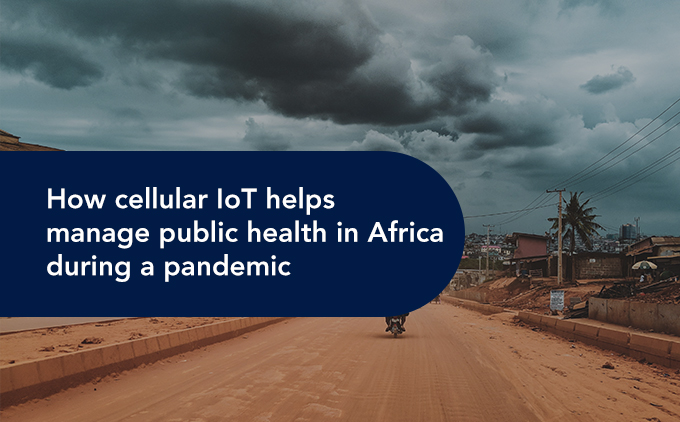
It’s a long, dusty road by motorcycle or bus for a courier travelling in countries like Uganda, Papua New Guinea or Mozambique. Strapped across the courier’s body is a bag that contains days-to-weeks’ worth of handprinted, hard-copy medical diagnostics results. Health officials need those results urgently in order to identify infected areas and control the spread of deadly infectious diseases.
There’s a major problem here: data on paper will never move faster than the spread of diseases. Given the COVID-19 pandemic, this is a recipe for disaster. However, there is more to the story.
This case study reveals how low and middle-income countries (LMICs) are using cellular IoT connectivity to manage public health during the COVID-19 pandemic:

OPEN PDF IN BROWSER

SAVE PDF ON YOUR DEVICE